confluxus [+][×] corner portals
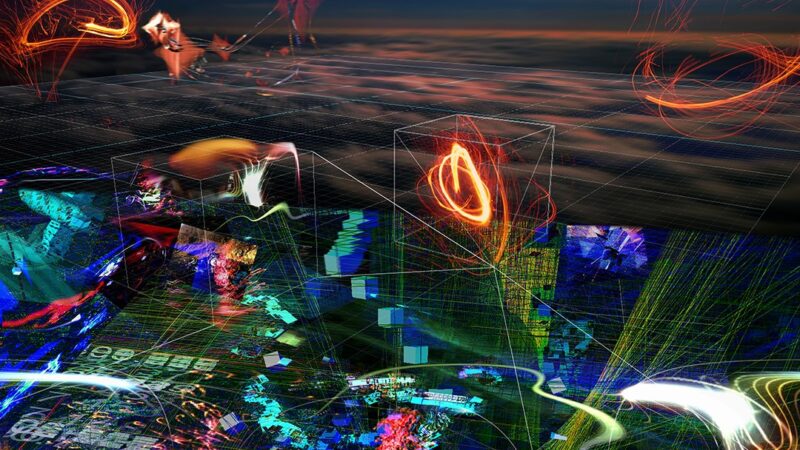
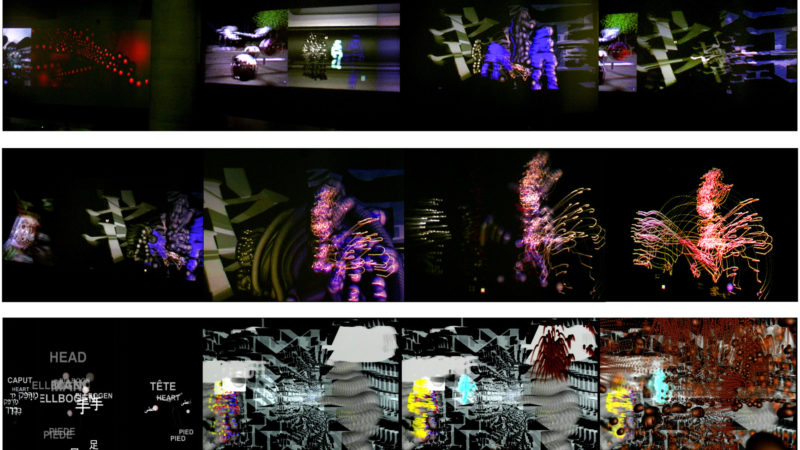
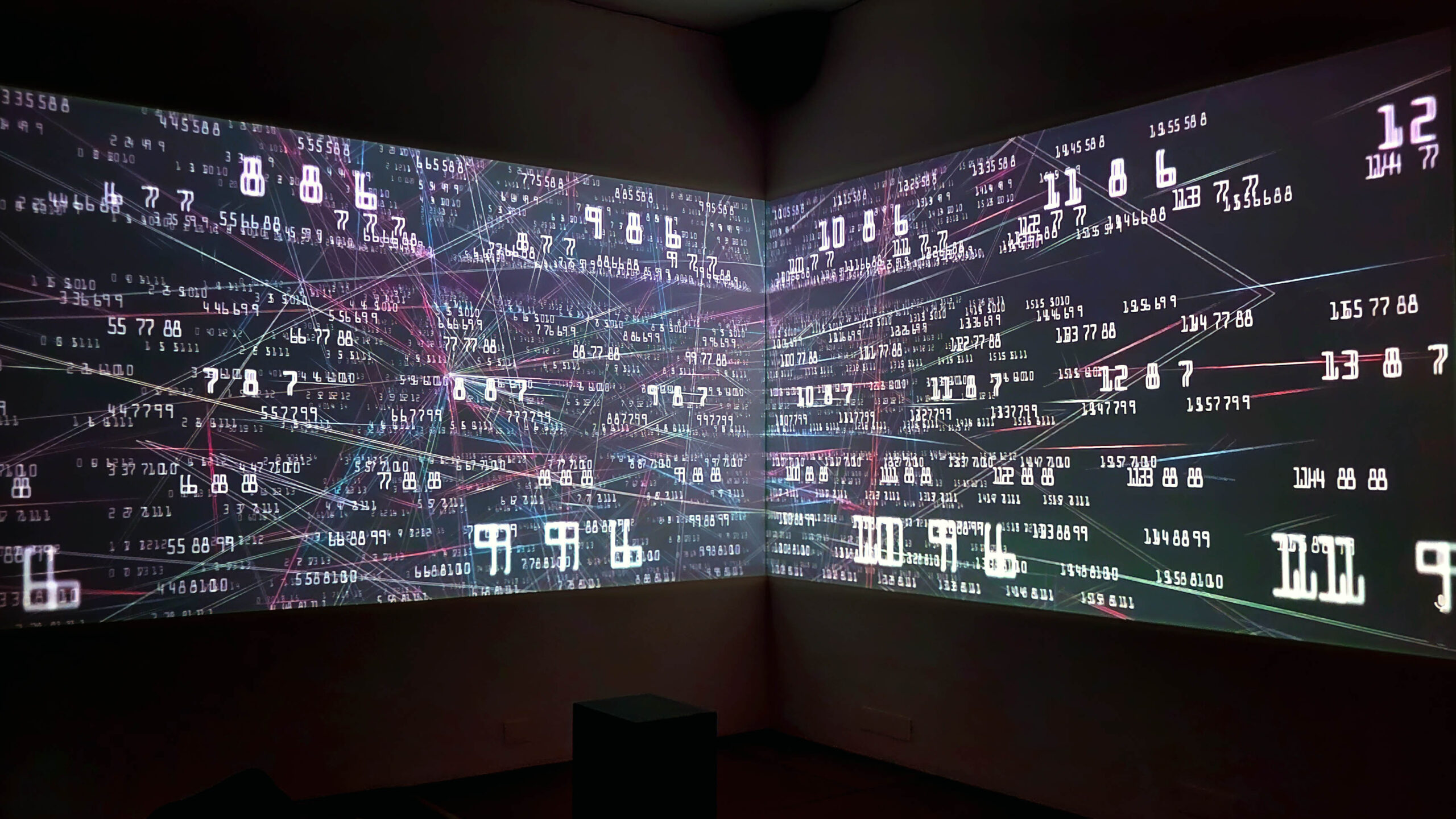
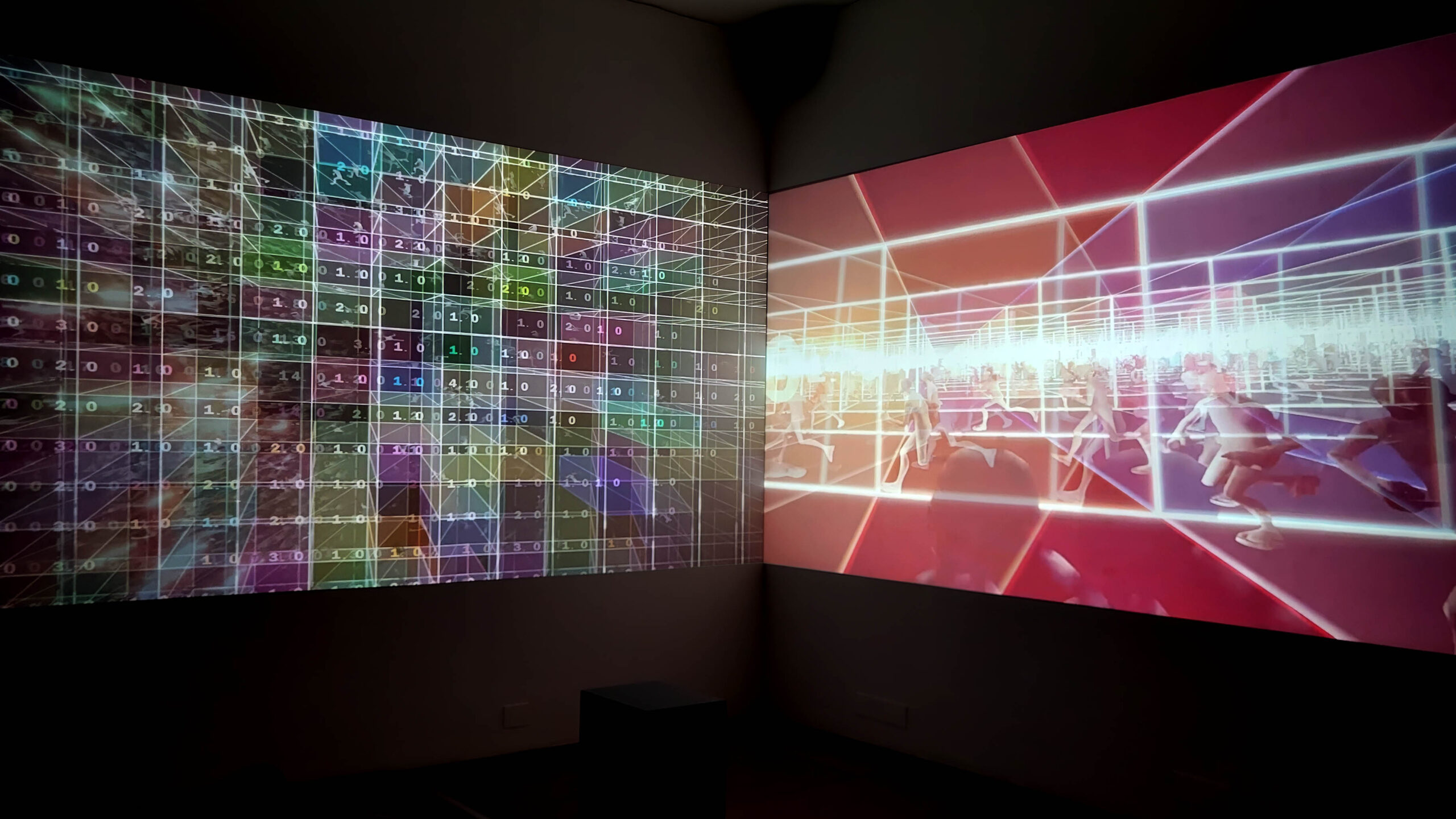
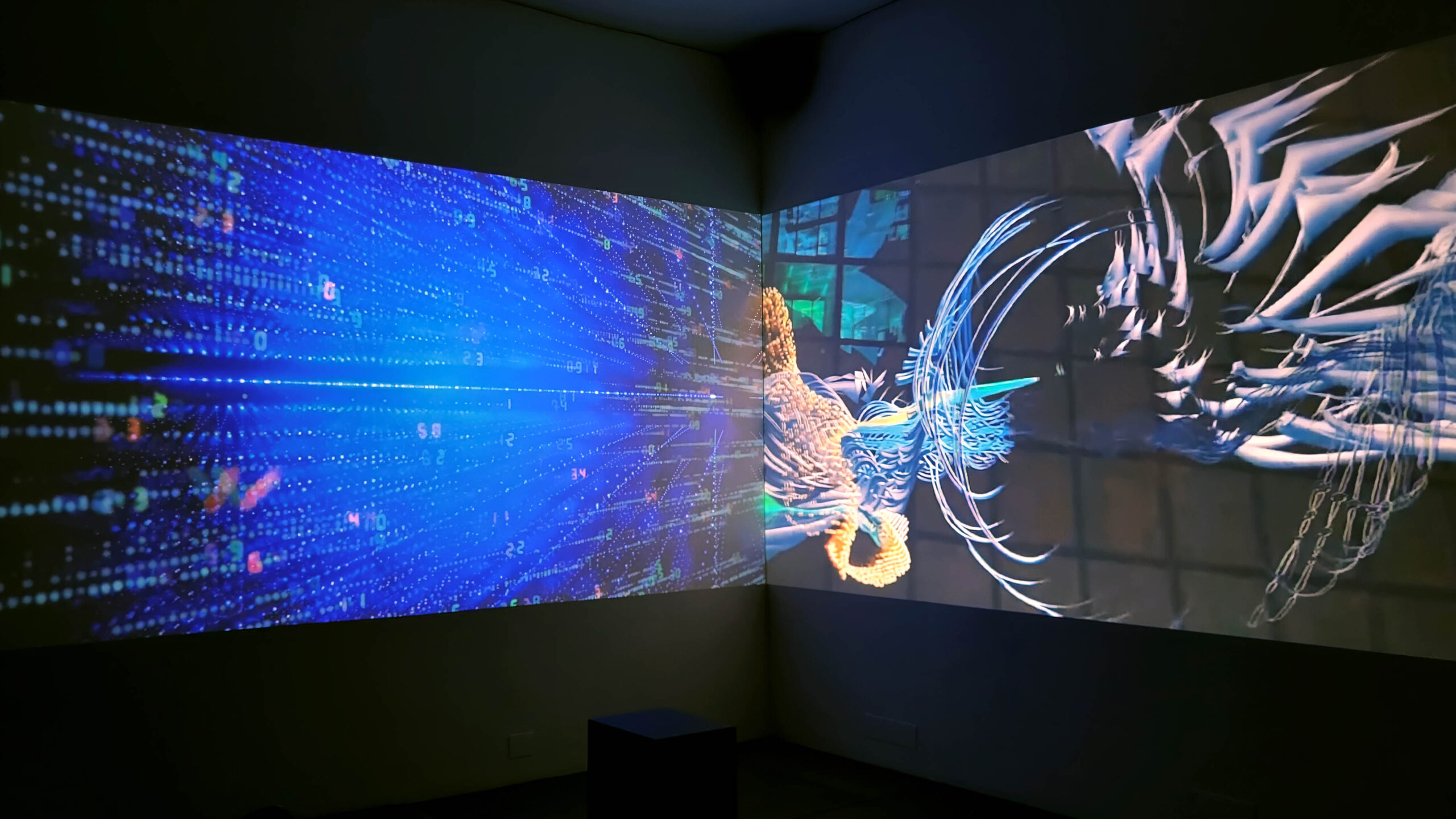
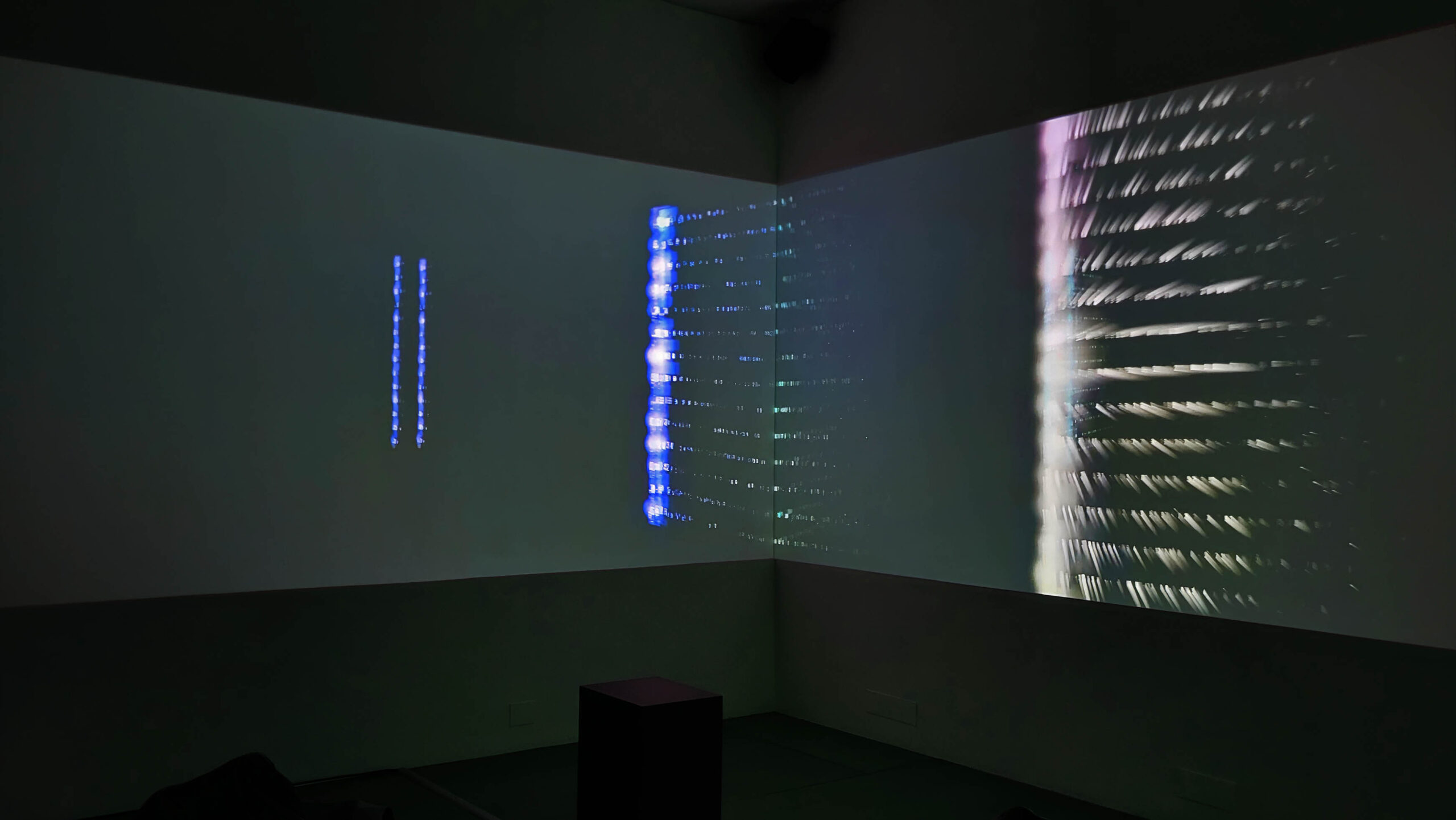
In the audiovisual installation confluxus [+][×] corner portals, two stereoscopic 3D projections are utilised to transform the gallery’s 90° corner into a simulated zone of transition and confluence. Dynamic structures — abstract geometries, letters, numbers, statistical and financial charts, data landscapes, flames, smoke, and organic forms — emerge within an illusory expanded spatiality on both sides of the wall planes as elemental flows, flares, and ephemeral spatial formations. Within them, not only Cartesian (rectangular coordinate systems) and non-Euclidean geometries, but also timelines and scales collide, slip, or momentarily coincide.
The installation positions the viewer not ‘in front of’ the image, but within the configuration of an illusory, pulsating architecture. Here, the expanded geometry of space functions as both a property and an instrument, referencing the principle of anisotropy in physics — where space and materials exhibit different properties depending on the viewing angle — which is also realised through the perception of the stereoscopic image.
The work indirectly points to the increasing role of code and algorithms in contemporary governance and communication practices — systems where information flows are constantly restructured for the sake of efficiency, yet remain prone to misunderstandings, inherent errors, and inconsistencies.
The title confluxus (from Latin — flowing together, confluence, intersection, crowding), along with the symbols [+] and [×], marks a multi-layered space of operations and transitions. [+] can be read as connection, addition, or entry, while [×] denotes splitting, crossing, or exit. confluxus [+][×] corner portals explore a potential connective space;
Although the work is inspired by the author’s interpretation of the phenomena and paradoxes of contemporary technological society, the installation — through its immersive impact and referencing the ‘immersive power’ defined by philosopher and mathematician Rainer Mühlhoff — encourages the viewer to create an individual mapping of their experience.